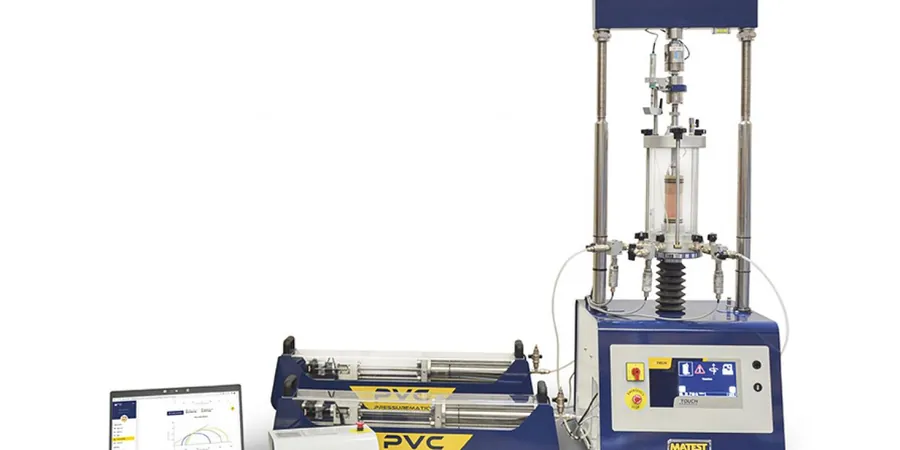
We were working on a 15-story residential tower near the Galleria when the client asked for drained and undrained shear strength parameters. The clay there is overconsolidated but highly plastic, so we ran a set of CU triaxial tests with pore pressure measurement on undisturbed samples. That data fed directly into the bearing capacity analysis for a mat foundation. In Houston, where the soil is mostly Beaumont clay with interbedded sands, the triaxial test is the standard method for obtaining c' and phi' values. We also used the results to check settlement rates under the proposed load. Without those stress-strain curves, the foundation design would have relied on empirical correlations. We prefer measured strength over guessed values every time.
Measured shear strength from triaxial tests in Houston clays typically cuts foundation costs by 15-20% compared to using only empirical correlations.
Methodology and scope
Sandy soils near the Ship Channel behave very differently from the stiff clays around Memorial Park. For projects on the west side, we often run consolidated-drained triaxial tests on sand samples to get the effective friction angle, then feed that into a slope stability analysis for levees and channel banks. On the clay-dominated east side, unconsolidated-undrained tests are more common for short-term stability in excavations and temporary cuts. The variability in Houston demands that we tailor the confining pressure and drainage conditions to match the in-situ stress state. We also cross-reference results with SPT blow counts for a complete picture. When we suspect anisotropic behavior, we run tests on both vertical and horizontal samples. This approach has saved several projects from overconservative designs.
Technical reference image — Houston
Local considerations
Houston's subtropical climate brings heavy rainfall and periodic flooding, and that changes the game for triaxial testing. A sample taken after a wet season can show much lower effective strength than one taken in a drought. We always document the moisture content at sampling and compare it with field conditions. The other big risk is sample disturbance — if the Shelby tube is mishandled, the triaxial results will underestimate strength. We run quality checks on every sample before testing. For sites near bayous or floodplains, we recommend additional consolidation tests to understand how the soil will behave under long-term saturation. Getting the strength wrong in a flood-prone area means risking foundation heave or settlement.
Quick test for total stress parameters in cohesive soils. Common for short-term stability checks on excavations and embankments in Houston clays.
02
Consolidated-Undrained (CU) Triaxial with Pore Pressure
Measures effective stress parameters c' and phi'. Standard for foundation design in stiff clays. Includes saturation check and pore pressure dissipation curves.
03
Consolidated-Drained (CD) Triaxial
Used for sands and slow-loading conditions. Provides drained friction angle for slope stability and retaining wall design. Longer test duration but essential for long-term analysis.
What is the difference between UU, CU, and CD triaxial tests?
UU tests measure undrained shear strength without allowing drainage or consolidation. CU tests consolidate the sample first and then shear it without drainage, measuring pore pressure. CD tests allow full drainage during both consolidation and shearing, providing drained strength parameters. The choice depends on the loading rate and drainage conditions in the field.
How much does a triaxial test cost in Houston?
The typical price range for a triaxial test in Houston is between US$1.810 and US$3.080 per test, depending on the test type (UU, CU, or CD), number of confining pressures, and whether pore pressure measurements are included. Volume discounts apply for multiple samples from the same project.
Why is the triaxial test preferred over direct shear for Houston clays?
Direct shear forces the failure plane horizontally, which may not match the field failure mode in anisotropic clays. The triaxial test allows failure on the natural weakest plane and provides a more complete stress-strain curve. For the highly plastic Beaumont clay found across much of Houston, triaxial results are more reliable for settlement analysis and bearing capacity.
What sample quality is required for a valid triaxial test?
We require undisturbed thin-walled tube samples (Shelby tubes) with a diameter of at least 73 mm. The sample must show no visible cracks, voids, or disturbance. We check the recovery ratio and reject samples with less than 95% recovery. For sands, we can use reconstituted samples at the target density and moisture content.
Location and service area
We serve projects across Houston and its metropolitan area.