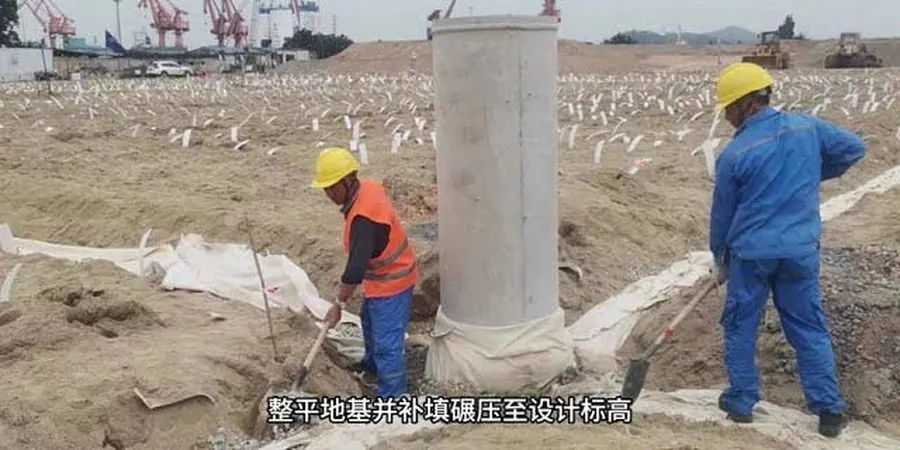
Houston sits on deep alluvial deposits of the Brazos River. These clays are soft, highly compressible, and prone to long-term settlement. ASCE 7-22 and IBC 2021 govern foundation design here, but they alone cannot solve the consolidation problem. Preloading with surcharge design is the most cost-effective method to achieve post-construction settlement targets before building. We design staged fill heights and monitoring schedules based on soil parameters from lab consolidation tests and field instrumentation. For sites with existing structures nearby, we often combine preloading with deep soil mixing to limit lateral displacement. The goal is simple: apply a load greater than the final structure, wait for primary consolidation, then remove the excess. This approach has solved settlement issues for dozens of Houston projects on Beaumont clay.
For Houston clay, a surcharge ratio of 1.3 can cut post-construction settlement by 60 percent compared to no preloading.
Methodology and scope
A common mistake contractors make in Houston is assuming one uniform fill height works across the entire site. The city's geology varies block to block. We see it often — a builder places 12 feet of surcharge on a lot where 8 feet was enough, and adjacent property gets damaged. Our design accounts for each layer's compression index, preconsolidation pressure, and coefficient of consolidation. We use field vane shear and piezocone data to calibrate the model. Where drainage paths are long, we incorporate vertical drains and combine preloading with vibrocompaction for sandy interbeds. The monitoring plan includes settlement plates, piezometers, and inclinometers. We stage the fill in lifts, typically 2 to 3 feet per week, allowing pore pressure dissipation between stages. The surcharge ratio (surcharge load / final design load) usually ranges from 1.2 to 1.5 depending on the project's settlement tolerance.
Technical reference image — Houston
Local considerations
Houston's elevation averages 80 feet above sea level. That sounds flat, but the city has subtle drainage divides and localized depressions. After heavy rain, perched water tables rise within days. If a preloading program is designed without considering this transient water, the fill can become unstable or cause differential settlement. We've seen a warehouse slab in east Houston settle 6 inches more than the design predicted because the contractor did not account for a shallow sand lens that kept pore pressures high. Our designs include piezometer arrays to track real-time pore pressure response. When needed, we add temporary drainage trenches and combine preloading with geocomposite drains to accelerate consolidation. The risk is real — skipping proper drainage design during preloading can double the wait time and blow the schedule.
Complete design of fill geometry, surcharge height, and lift schedule. Includes settlement plate installation, piezometer monitoring, and weekly progress reports. We adjust the fill rate based on real-time data.
02
Preloading with Wick Drains
For deep soft clays, we combine preloading with prefabricated vertical drains (PVDs). We design the drain spacing and depth to achieve 90% consolidation within the project schedule. Ideal for sites with more than 20 feet of compressible clay.
03
Surcharge Removal and Verification
After primary consolidation is confirmed, we oversee the removal of surcharge fill. We conduct field verification tests — plate load tests and settlement monitoring — to confirm the subgrade meets design requirements before construction starts.
Applicable standards
ASTM D2435 (Standard Test Method for One-Dimensional Consolidation Properties of Soils), ASTM D4546 (Standard Test Methods for One-Dimensional Swell or Collapse of Soils), ASCE 7-22 (Minimum Design Loads and Associated Criteria for Buildings), FHWA NHI-16-072 (Ground Improvement Methods Reference Manual, Chapter on Preloading)
Frequently asked questions
How long does preloading with surcharge typically take in Houston clay?
For most Houston sites with 15 to 30 feet of Beaumont clay, primary consolidation takes 4 to 10 months. With wick drains, that can drop to 2 to 4 months. The duration depends on the clay's coefficient of consolidation and the drainage path length.
What is the typical surcharge height for a warehouse project in Houston?
We usually design surcharge heights between 6 and 12 feet above the final grade. The exact height depends on the design load, the clay's compression index, and the allowable post-construction settlement. A typical surcharge ratio is 1.3.
Can preloading be used on sites with existing structures?
Yes, but with caution. We limit the surcharge height to avoid lateral displacement that could damage adjacent foundations. We often use vertical drains and monitor inclinometers daily. For sensitive neighbors, we may reduce the surcharge ratio and extend the duration.
What monitoring equipment do you use during preloading?
We install settlement plates at 50 to 100 foot spacing, piezometers at multiple depths, and inclinometers near property lines. Data is collected weekly and plotted against the design curve. If pore pressures exceed safe limits, we pause filling until they dissipate.
How much does preloading with surcharge design cost in Houston?
For a typical 5-acre site, the design and monitoring package ranges from US$840 to US$2.880. This covers the initial analysis, instrumentation, and 6 months of weekly monitoring. Total project cost including fill placement and removal is higher and depends on site access and fill source distance.
Location and service area
We serve projects across Houston and its metropolitan area.