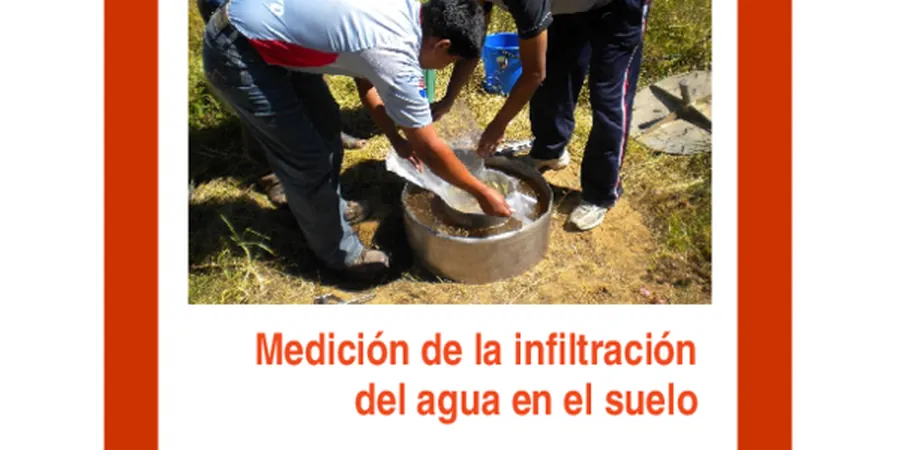
I remember a large parking lot expansion near the Katy Freeway where the client needed infiltration rates for a retention basin design. The clay-rich Beaumont Formation here makes water move much slower than many engineers expect, so running a proper Porchet test on site was the only way to get reliable numbers. We set up a double-ring infiltrometer at three locations across the 12-acre lot and recorded steady-state flow over four hours. That data directly fed the stormwater plan and saved the client from over-designing an underground vault. In Houston, where heavy rain events are common, having a measured infiltration rate from a drainage geotechnical study is essential before you finalize any detention structure.
Steady-state infiltration rates in Houston's Beaumont clay can be ten times lower than sandy layers just 10 miles west — testing avoids costly over-design.
Methodology and scope
The difference between testing in the Heights versus near the Ship Channel is stark. In the Heights, the topsoil is a lean clay with some silt, so infiltration rates hover around 0.2 to 0.6 inches per hour. Down by the Channel, you get fat clays with high plasticity that can drop below 0.1 inches per hour. Our team uses the Porchet method for shallow excavations and the double-ring infiltrometer for deeper profiles, always following ASTM D3385. We also correlate the results with grain-size data from granulometry analysis and natural moisture content to see how compaction history affects permeability. The key parameters we record include:
Steady-state infiltration rate (in/hr)
Initial soil moisture content (%)
Bulk density of the test layer (pcf)
Saturation time to reach steady flow (minutes)
This combination gives engineers a solid basis for sizing infiltration trenches or rain gardens across Houston's diverse soil map.
Technical reference image — Houston
Local considerations
IBC 2018 and the City of Houston Drainage Criteria Manual both require measured infiltration rates for any low-impact development design. The biggest risk we see locally is assuming a uniform rate across a site. Houston's soil is far from homogeneous — one test pit may show a sandy lens while a neighbor shows pure clay. If you use a single value, you risk overestimating percolation and causing ponding or foundation moisture problems. Our team always runs at least three tests per acre and flags any outliers. Combining infiltration data with a soil expansiveness evaluation helps predict long-term volume change around the test zone, which is crucial for slab-on-grade performance in this region.
Porchet (open-hole) or double-ring infiltrometer per ASTM D3385-18
Typical infiltration rate (Houston clay)
0.1 – 0.6 in/hr
Test depth range
6 inches to 6 feet (deeper with casing)
Steady-state criteria
Rate change < 10% over 60 minutes
Number of tests per site
3 minimum (ASTM D3385 recommends ≥3 for representative data)
Reporting standard
Engineering report with rate vs. time curve, saturation history, and field notes
Associated technical services
01
Double-Ring Infiltrometer Testing
ASTM D3385 tests with 12-inch and 24-inch ring diameters. We record steady-state rates, saturation curves, and provide a full field report with photos and GPS locations.
02
Porchet (Open-Hole) Infiltration
For shallow excavations or boreholes, we perform Porchet tests measuring water level drop over time. Ideal for preliminary feasibility of rain gardens or small detention basins.
03
Permeameter Laboratory Correlation
We run falling-head and constant-head permeability tests on undisturbed samples from the same boreholes. This allows direct comparison between field infiltration and lab-derived hydraulic conductivity.
Applicable standards
ASTM D3385-18 – Standard Test Method for Infiltration Rate of Soils in Field Using Double-Ring Infiltrometer, IBC 2018 – Chapter 18, Section 1805.2 (Foundation drainage), City of Houston Drainage Criteria Manual, Section 3.4 (Infiltration testing requirements), ASTM D2487-17 – Standard Practice for Classification of Soils for Engineering Purposes
Frequently asked questions
What is the difference between Porchet and double-ring infiltrometer methods?
The Porchet method uses a single open hole or cylinder and measures water level drop over time. The double-ring infiltrometer uses two concentric rings to force vertical flow and minimize lateral spreading. In Houston clays, double-ring results are generally more conservative and reproducible, while Porchet is faster for reconnaissance-level data. Both methods are valid under ASTM D3385, but double-ring is preferred for regulatory submittals.
How many infiltration tests are required for a typical Houston commercial site?
The City of Houston Drainage Criteria Manual recommends a minimum of three tests per acre, with at least one test per distinct soil unit. For sites with variable fill or natural soil changes, we often increase to five tests to capture the range. Our standard protocol includes a field log with moisture content and density for each test location.
Can infiltration testing be done in heavy clay soils like Beaumont formation?
Yes, but you need patience and proper equipment. Beaumont clay can have infiltration rates below 0.2 in/hr, so tests may take 4 to 6 hours to reach steady state. We pre-soak the test area for 30 minutes before measuring to saturate surface cracks. The double-ring infiltrometer is especially important here because it reduces edge effects. If the clay is very tight, we sometimes extend the test period or use a falling-head permeameter on undisturbed samples as backup.
What is the typical cost range for a double-ring infiltration test in Houston?
For a standard field visit with three double-ring tests and a written report, you can expect to pay between US$310 and US$470 depending on site access, depth requirements, and travel distance. Cost may increase if you need additional tests or if the soil requires pre-soaking for more than one hour. We provide a fixed-price quote after a brief site review.
Location and service area
We serve projects across Houston and its metropolitan area.