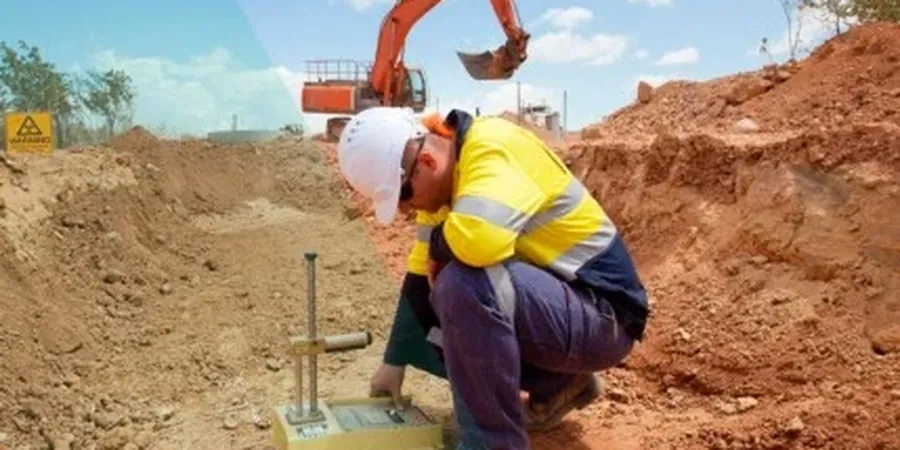
Designing a road in Houston’s Memorial area versus a corridor in Pasadena means tackling very different subgrade conditions. Memorial sits on stiff Beaumont clay, while Pasadena has softer alluvial deposits near the Ship Channel. In our experience, the subgrade support varies by 40% or more across these zones, which directly impacts pavement thickness. That is why we always start with a detailed CBR test and soil classification before any structural design. We also recommend a soil compaction test to establish the optimum moisture content for the local fill materials.
Houston’s clay subgrades can swell over 6% when wet, enough to lift a concrete pavement slab by an inch.
Methodology and scope
Houston’s subtropical climate brings over 50 inches of rain annually, which saturates clay subgrades for weeks at a time. That moisture cycle causes volume changes that crack rigid pavements and deform flexible ones. We see this most often on projects inside the 610 Loop, where old fill and high water tables create a tough environment. To address it, we perform Atterberg limits, swell tests, and soaked CBR at multiple moisture conditions. When the subgrade shows high plasticity, we incorporate lime or cement stabilization into the pavement section. A subgrade drainage study helps us confirm that water won't get trapped under the base course, which is common here during hurricane season.
Technical reference image — Houston
Local considerations
ASCE 7 and the Houston Public Works design criteria require a minimum subgrade modulus for pavement sections, but the real risk here is differential swelling. When a clay subgrade dries out under the pavement edge and stays wet under the center, the slab curls and cracks. We have seen this cause pavement failure within two years on local collector roads. To avoid it, we run a swell-consolidation test on undisturbed samples and design a moisture barrier or a stabilized subbase that can handle the movement without losing structural support.
Soaked and unsoaked CBR tests on compacted samples, plus Mr correlation for mechanistic-empirical pavement design. We run multiple moisture conditions to simulate Houston’s wet-dry cycles.
02
Subgrade Soil Characterization
Full classification including grain size, Atterberg limits, natural moisture content, and compaction curves. We identify expansive clays and recommend stabilization treatments before base placement.
03
Pavement Section Design Review
We analyze traffic loads, subgrade support values, and drainage conditions to recommend flexible or rigid pavement thickness. Our reports include a geotechnical risk assessment for swelling and settlement.
Why does Houston’s clay subgrade cause so many pavement failures?
Beaumont clay and other local formations have high plasticity and shrink-swell behavior. When moisture changes, the subgrade volume shifts, cracking rigid pavements and rutting flexible ones. A soaked CBR test and swell test help us predict this movement and design a stabilized section that can handle it.
What is the typical cost range for a pavement geotechnical study in Houston?
For a standard road or parking lot project, the cost ranges between US$720 and US$4.570, depending on the number of borings, lab tests (CBR, Proctor, Atterberg), and the depth of investigation. Larger arterial roads with multiple sections cost more due to higher sample volume.
How deep should we drill for a subgrade evaluation on a new subdivision road?
We recommend drilling at least 5 feet below the proposed subgrade elevation, or to the depth of active moisture variation — typically 6 to 8 feet in Houston. This captures the full clay profile that could swell or settle under the pavement.
Location and service area
We serve projects across Houston and its metropolitan area.