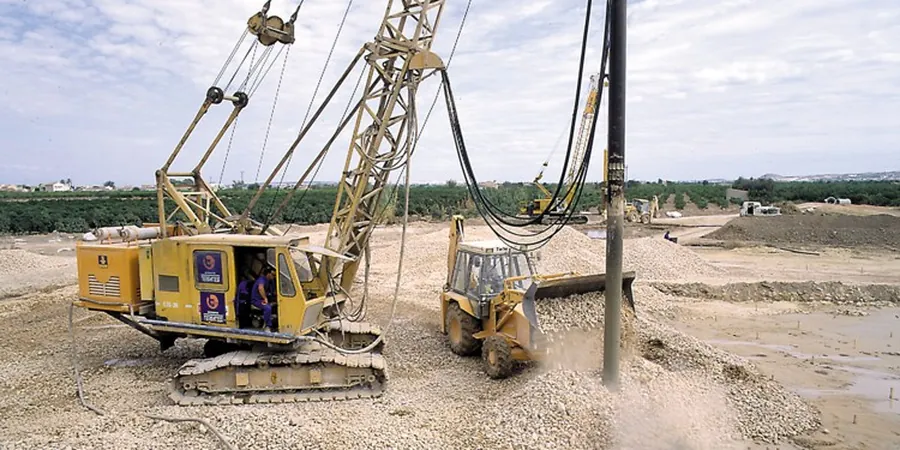
I remember a job near the Houston Ship Channel where the client wanted a 15-story warehouse on soft Beaumont clay. Standard spread footings would have settled six inches. We ran a stone column design that cut total settlements to under one inch. The key was matching the column diameter and spacing to the actual shear strength profile. Before we start any stone column design in Houston, we always cross-check the soil stratigraphy with a deep excavation assessment to avoid surprises in the bearing layer. That project still holds up after ten years.
Stone column design in Houston's Beaumont clay requires site-specific shear strength profiles, not generic charts from textbooks.
Methodology and scope
The biggest mistake we see contractors make is assuming one stone column pattern fits every site. Houston has stiff crust over soft clay layers that vary from 15 to 40 feet deep. If you size columns by rule of thumb instead of by actual stress ratios, you either over-design and waste money or under-design and risk differential settlement. Our stone column design process starts with CPT and SPT data to define the undrained shear strength profile. We then run settlement analyses using Priebe's method calibrated with local experience. For sites with high groundwater, we also check subgrade reaction values to ensure the stone columns won't punch into the clay. Typical parameters we evaluate include:
Column diameter: 0.6 to 1.2 meters
Spacing: 1.5 to 3.0 meters in triangular grid
Area replacement ratio: 10% to 35%
Stone gradation: 40-80 mm clean crushed stone
Technical reference image — Houston
Local considerations
Houston grew fast after the 1950s oil boom, building on floodplains and old rice fields with highly compressible clay. The risk of using stone columns without proper design is real. Poorly spaced columns can cause lateral bulging into the clay, triggering settlement in adjacent footings. We saw a warehouse in Pasadena where undersized columns led to a 4-inch differential settlement within two years. A thorough stone column design must account for the city's high plasticity index soils and the seasonal moisture changes from the Gulf Coast climate.
For warehouses, distribution centers, and industrial slabs on soft clay. We optimize column spacing to keep differential settlement under 1 inch across the entire footprint. Includes settlement analysis and construction specifications.
02
Stone Column Design for Embankment Support
For highway approaches, bridge abutments, and levee foundations in Houston. We design columns to improve bearing capacity and reduce lateral spreading under fill loads. Includes stability checks for global and rotational failure.
What is the typical cost range for stone column design in Houston?
For a standard commercial project, the design fee for stone column design in Houston ranges between US$1,470 and US$5,870. This depends on site size, number of test holes, and complexity of the soil profile. Contact our team for a quote specific to your project.
How does stone column design differ from deep foundation design?
Stone columns improve the existing soil rather than transferring loads to a deeper stratum. In Houston's soft clays, stone column design is often more cost-effective than piles for medium loads up to 2,000 psf. Piles are still needed for high-rise structures where bearing capacity exceeds what stone columns can economically provide.
What soil conditions are ideal for stone column design in Houston?
The best candidates are sites with at least 15 feet of soft to medium clay (Cu between 20 and 60 kPa) underlain by a stiff layer. Stone column design works well in Beaumont and Lissie formations common in Houston. Very soft clays with Cu below 15 kPa may require preloading or other ground improvement methods first.
How long does a typical stone column design take?
From initial soil testing to final design report, expect 2 to 4 weeks for a typical Houston site. The timeline depends on how quickly we can schedule CPT or SPT borings and the extent of laboratory testing needed. A preliminary stone column design can be delivered within 7 days if geotechnical data already exists.
What construction quality control is needed for stone columns?
We recommend field monitoring of stone column installation including diameter verification using a downhole camera, load tests on trial columns to confirm settlement reduction, and gradation checks on the stone fill. A proper stone column design includes a QA/QC plan that specifies acceptance criteria for each column.
Location and service area
We serve projects across Houston and its metropolitan area.