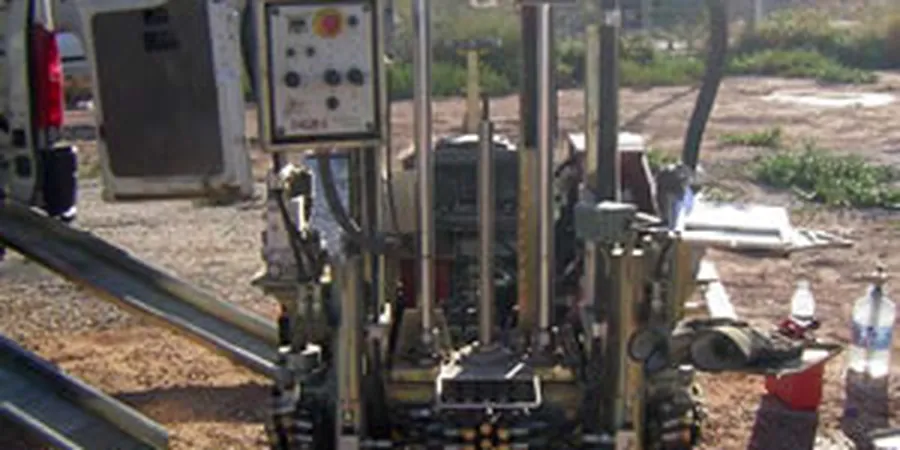
Houston’s explosive growth since the 1960s turned coastal prairies and former rice fields into a sprawling metro area. That rapid urbanization means much of the city sits on thick layers of Beaumont clay, interbedded with sand lenses and occasional silty zones. A standard SPT can miss those thin sand layers or underestimate the variability in undrained shear strength. That is where the Cone Penetration Test comes in. We push a 10-ton cone at 20 mm/s to record continuous readings every 2 cm. For projects near the Ship Channel or along I-10, this method gives us the vertical resolution needed to spot those critical sand seams. Before designing deep foundations, we often pair CPT with laboratory triaxial tests to calibrate the cone factors against actual strength data from the same clay.
A single CPT sounding can reveal more stratigraphic detail in one hour than ten SPT borings spread over two days.
Methodology and scope
A common mistake we see in Houston is relying solely on SPT N-values to estimate pile capacity in stiff clay. The N-value can be artificially high due to friction along the rod, giving a false sense of strength. CPT eliminates that problem. The cone measures tip resistance (qc), sleeve friction (fs), and pore pressure (u2) all at once. For a typical 30 m deep profile in the Gulf Coast plain, we get a continuous log that picks up every change in lithology. We also run dissipation tests in clay layers to estimate consolidation coefficients — critical when you are dealing with the high-plasticity clays that dominate the city. The procedure follows ASTM D5778-20, and our rig is equipped with both piezocone and seismic modules. When the project requires shear wave velocity data, we add a MASW survey to complement the cone results and refine the site class per ASCE 7.
Technical reference image — Houston
Local considerations
A 15-story apartment tower on Westheimer Road was being designed with a mat foundation. The geotechnical report, based only on SPT borings, showed consistent stiff clay to 25 m. We ran three CPT soundings on the same site and found a 1.2 m loose sand layer at 18 m depth — something the SPT had completely averaged out. That layer would have caused differential settlement under the tower’s core. The design team switched to a pile foundation that bypassed the sand, avoiding a potential multi-million-dollar repair. Missing that thin lens was the difference between a safe structure and a costly fix.
0–100 MPa (typical range in Beaumont clay: 0.5–4 MPa)
Sleeve Friction (fs)
0–1 MPa
Pore Pressure (u2)
0–3 MPa (piezocone)
Penetration Rate
20 mm/s ± 5% (ASTM D5778)
Depth Range
Up to 50 m with 10-ton cone; deeper with 20-ton rig
Dissipation Test Duration
30–120 min per clay layer (t50)
Associated technical services
01
Standard Piezocone Sounding (CPTu)
Continuous profiling with qc, fs, and u2 measurements every 2 cm. Includes dissipation tests in clay layers and a preliminary stratigraphic log. Recommended for up to 30 m depth on commercial sites. Delivered within 48 hours of field completion.
02
Seismic CPT (SCPTu) for Site Class Assessment
Adds a seismic module that records vs30/" data-interlink="1">shear wave velocity at 1 m intervals. Used to determine Vs30 for ASCE 7 site class and liquefaction triggering analysis. Ideal for high-rise projects near the Houston Ship Channel or along the Katy Prairie.
Applicable standards
ASTM D5778-20 (Standard Test Method for Electronic Friction Cone and Piezocone Penetration Testing of Soils), ASCE 7-22 (Minimum Design Loads, site classification based on CPT vs data), FHWA NHI-05-042 (Cone Penetration Test for Foundation Design, FHWA manual)
Frequently asked questions
How much does a CPT cost in Houston?
For a standard piezocone sounding up to 30 m depth, expect US$150 to US$280 per hole, depending on access conditions and the number of dissipation tests. Volume discounts apply for five or more soundings on the same site.
What is the difference between CPT and SPT for Houston clay?
CPT gives a continuous profile of tip resistance and sleeve friction, so it picks up thin sand layers and strength transitions that SPT can miss due to its discrete 1.5 m sampling interval. In high-plasticity Beaumont clay, CPT also provides pore pressure data, which SPT cannot. For pile design in stiff clay, CPT often yields more reliable shaft friction estimates than N-values.
Can CPT be used for liquefaction assessment in Houston?
Yes. The piezocone measures pore pressure response in real time, which is essential for evaluating liquefaction susceptibility in the loose sand lenses common beneath the coastal plain. We apply the Robertson & Wride (1998) method adapted for Gulf Coast soils, and the continuous profile allows us to identify every potentially liquefiable layer, not just those intersected by an SPT spoon.
Location and service area
We serve projects across Houston and its metropolitan area.