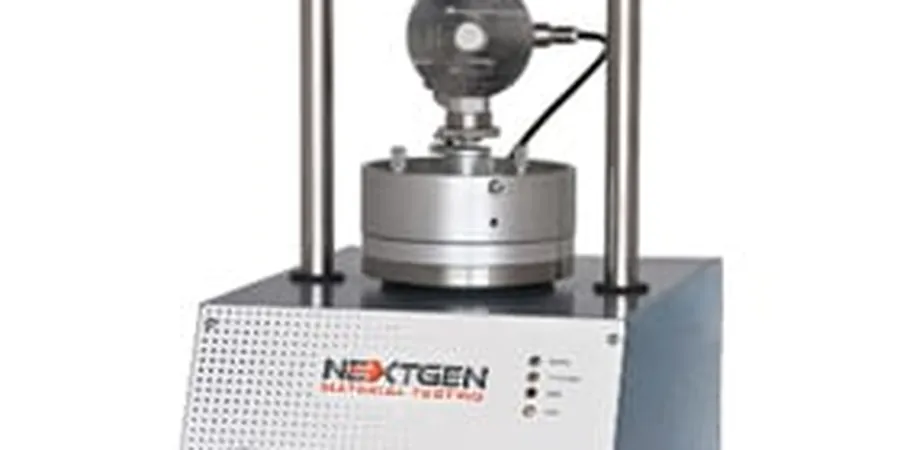
A 15-story tower near Buffalo Bayou needed deep foundation design, but the geotechnical report came back with high compressibility in the Beaumont clay. We ran a full suite of oedometer consolidation tests on undisturbed samples taken from 40 feet depth. The results showed an overconsolidation ratio of 1.8, which meant significant post-construction settlement under the proposed column loads. That data changed the foundation design from shallow spread footings to a mat foundation with deep soil improvement. In Houston, the clay profile is thick and prone to secondary compression; skipping the consolidation test would have led to differential settlement within five years. We always pair this with a SPT program to correlate blow counts with consolidation parameters, and when swelling clays are present we run Atterberg limits to confirm plasticity indices before loading.
Houston clays can compress up to 3 inches under a 4-story building load. The oedometer test predicts that settlement before you pour a single yard of concrete.
Methodology and scope
Houston sits on approximately 2,000 feet of Quaternary alluvial and deltaic deposits, with the Beaumont Formation being the dominant clay unit. The oedometer test (ASTM D2435-11) measures the rate and magnitude of soil consolidation under incremental vertical loads. We load specimens at 0.25, 0.5, 1, 2, 4, and 8 ksf, recording deformation every 0.01 mm. Key output parameters include the compression index (Cc), recompression index (Cr), preconsolidation pressure (σ'p), and coefficient of consolidation (cv). For Houston clays, typical Cc values range from 0.25 to 0.45, and cv falls between 0.5 and 2.0 ft²/day. We also run swell tests on overconsolidated samples to estimate heave potential. The test takes 5 to 10 days depending on load increments and sample permeability. Our lab holds ISO 17025 accreditation and follows ASTM D2435, D4186 (constant rate of strain), and D4546 (swell-consolidation). We cross-check preconsolidation pressure using Casagrande's log construction method.
Technical reference image — Houston
Local considerations
In Houston, many times we see developers trying to skip consolidation testing on projects with light loads like parking garages or single-story retail. That is a mistake. The Beaumont clay is highly plastic and can experience secondary compression for decades after construction. A parking lot built without settlement analysis may develop a 6-inch depression under the wheel path within three years. The risk is not just in the total settlement but in the differential movement between columns. We also see cases where the preconsolidation pressure is misinterpreted because the sample quality was poor. Disturbed samples give lower σ'p values, leading to overdesigned foundations. Using thin-walled Shelby tubes and proper handling is non-negotiable in Houston.
For sites with high plasticity clays (PI > 40), we run swell tests per ASTM D4546 to estimate heave pressure and volume change under load. This is critical for slab-on-grade foundations in southwest Houston.
02
Constant Rate of Strain (CRS) Consolidation
When time is tight, we use the CRS method (ASTM D4186) to obtain consolidation parameters in 2–3 days instead of 7–10. The continuous loading curve gives precise preconsolidation pressure values for quick design decisions.
03
Secondary Compression Analysis
We extend the oedometer test to 24+ hours per load increment to measure secondary compression index (Cα). For clay fills and soft deltaic deposits, this data prevents long-term creep settlement in embankments and levees.
Applicable standards
ASTM D2435-11 (Standard Test Methods for One-Dimensional Consolidation Properties of Soils), ASTM D4186-12 (Standard Test Method for One-Dimensional Consolidation Properties of Saturated Cohesive Soils Using Controlled-Strain Loading), ASTM D4546-14 (Standard Test Methods for One-Dimensional Swell or Collapse of Soils)
Frequently asked questions
How much does an oedometer consolidation test cost in Houston?
A standard oedometer test with five load increments and three load-unload cycles typically costs between US$210 and US$390 per sample. The price depends on the number of increments, swell testing, and whether you need CRS (constant rate of strain) for faster turnaround. We provide a firm quote after reviewing the project scope.
What is the difference between consolidation and compaction?
Consolidation is a time-dependent volume change in saturated clays caused by drainage of pore water under sustained load. Compaction is the mechanical densification of soil by applying energy (rolling, tamping) at a specific moisture content. In Houston, consolidation testing is essential for foundation settlement prediction, while compaction tests (Proctor) are used for fill quality control. They measure entirely different properties.
How long does the oedometer test take and when will I get results?
A standard oedometer test with 5 load increments and one unload-reload cycle takes 7 to 10 days. The constant rate of strain (CRS) method cuts that to 2–3 days. We issue a preliminary report with Cc, Cr, and σ'p within 24 hours of test completion, followed by a full report including consolidation curves and settlement calculations within 3 business days.
Location and service area
We serve projects across Houston and its metropolitan area.